Why Is My Chicken Breast Always Dry? (And How to Actually Fix It)

If you’ve ever cut into a chicken breast and felt that familiar disappointment – dry, rubbery, flavourless… you’re not alone. I started cooking quite young, and for a long time I genuinely couldn’t understand why my chicken kept turning out that way. I tried cooking it longer, thinking it wasn’t done. I tried cooking it faster, thinking the heat was too low. It kept coming out dry.
It wasn’t until I started studying food science that I understood what was actually happening and more importantly, what to do about it. Chicken breast is not a forgiving ingredient. But once you understand why it dries out, fixing it is surprisingly straightforward.
Why chicken breast dries out – the science
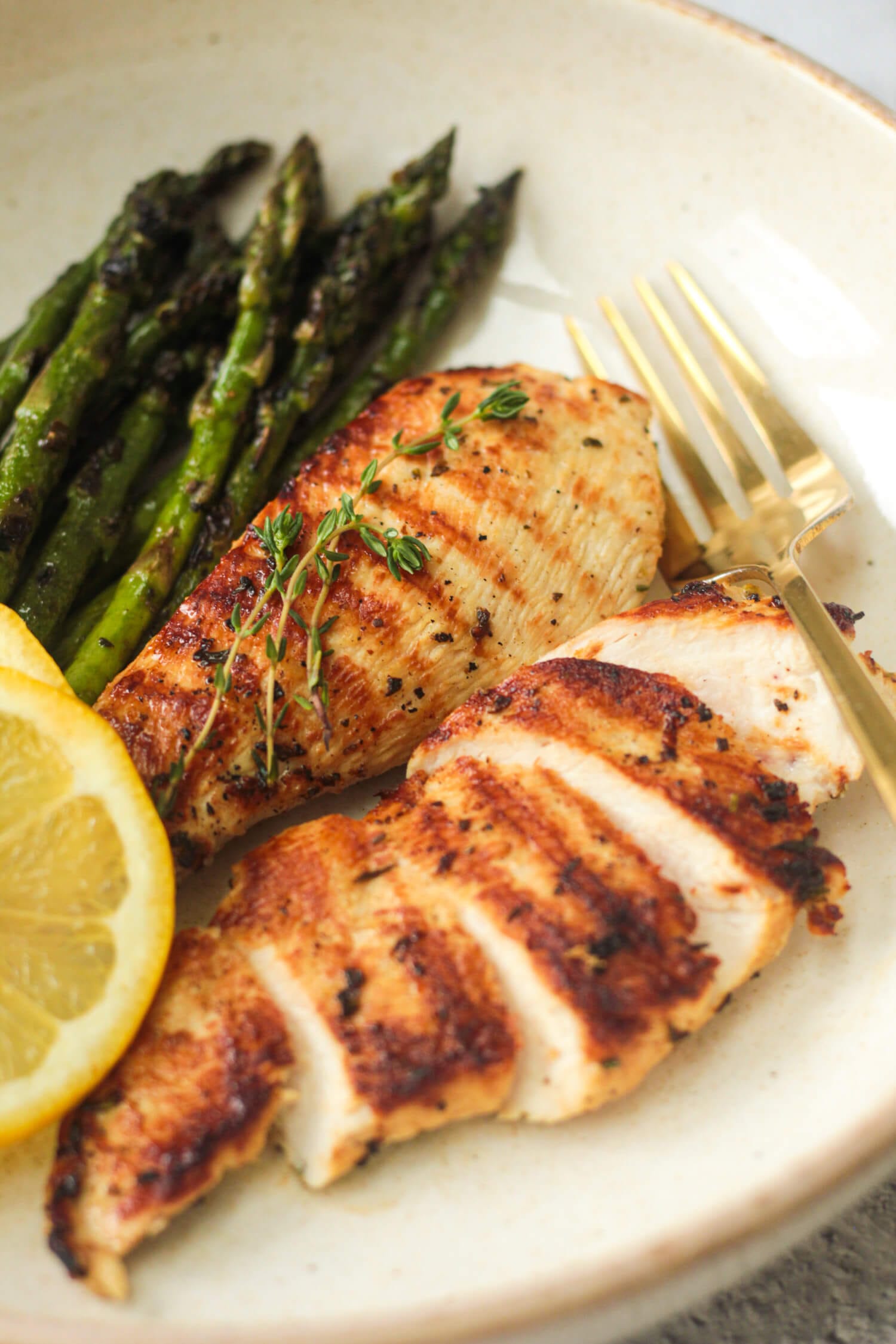
Chicken breast is made up mostly of lean muscle fibres with relatively little fat running through them. That’s what makes it a popular choice – it’s high in protein, mild in flavour, and naturally lean. But that same leanness also makes it easy to overcook.
As chicken heats up, the proteins inside the muscle fibres begin to denature. They unfold and then bond together, causing the fibres to contract and squeeze out moisture. This process begins well before the chicken is fully cooked and becomes more pronounced as the internal temperature rises.
Chicken thighs contain more fat and connective tissue, making them more forgiving during cooking. The extra fat adds richness, while the connective tissue contributes to a more succulent texture. Chicken breast has much less of that natural buffer. Once the internal temperature climbs much above 70–74°C (160–165°F), the muscle fibres have contracted enough to force out much of their moisture, leaving the meat drier and firmer.
That’s why the difference between perfectly cooked chicken breast and overcooked chicken breast is often just a matter of two or three minutes, or a few degrees of temperature.
The most common mistakes and how to fix them
Mistake 1: Cooking straight from the fridge
Cold chicken breast placed directly into a hot pan is more likely to cook unevenly. The outside heats up much faster than the centre, so by the time the thickest part is fully cooked, the outside may already be overdone.
Fix: Take your chicken breast out of the fridge 15–20 minutes before cooking to take the chill off. It won’t reach room temperature, but it will warm slightly and can cook a little more evenly, especially if it’s thick.
Mistake 2: Not using a meat thermometer
Cooking by time or colour alone is unreliable. Every chicken breast is a different size and thickness. The most accurate way to avoid overcooking is to check the internal temperature.
Fix: Use a meat thermometer. Chicken is considered safe to eat once it reaches an internal temperature of 74°C (165°F). For the juiciest results, remove the chicken from the heat when it reaches 70–72°C (158–162°F) and let it rest. The temperature will often continue to rise by a few degrees as it rests.
Mistake 3: Skipping the rest
Cutting into chicken straight after cooking allows more of the hot juices to run out onto the cutting board. Resting gives those juices time to redistribute throughout the meat, so more stay inside when you slice it.
Fix: Let your chicken breast rest for at least 5 minutes before slicing. This simple step helps keep the meat juicier.
Mistake 4: Cooking on high heat the whole way through
High heat is great for creating a golden crust, but if you cook the entire chicken breast over high heat, the outside can overcook before the centre reaches the correct temperature.
Fix: Sear the chicken over medium-high to high heat to develop colour, then reduce the heat to medium-low and cover the pan, or transfer it to the oven to finish cooking. This gentler approach gives the centre time to cook through without drying out the outside.
Mistake 5: Using too little fat
Chicken breast contains very little intramuscular fat, so it benefits from cooking with enough oil or butter. While added fat won’t prevent the chicken from drying out if it’s overcooked, it helps transfer heat evenly, prevents sticking, promotes browning, and adds flavour.
Fix: Use enough oil or butter to lightly coat the pan. The chicken should sizzle as soon as it hits the hot surface, which helps create a golden crust before the inside finishes cooking.
Food Science Corner
Why marinating works and what’s actually happening to your chicken
Marinating chicken breast isn’t just about adding flavour. Depending on the ingredients, it can also improve the texture of the meat’s surface.
Most marinades contain a combination of salt, oil and an acidic ingredient, such as lemon juice, yogurt or buttermilk. Each plays a different role. Salt is the most important ingredient for juiciness because it helps the meat retain more moisture during cooking. Acid gently changes the structure of proteins in the outer layer of the chicken, creating a more tender surface, while oil helps the marinade coat the meat, promotes even browning and carries flavour.
This is why buttermilk is such a classic marinade for fried chicken. Its mild acidity gently tenderises the surface, while the salt helps the chicken stay juicy and the dairy proteins encourage a beautifully browned, crisp crust.
One important thing to remember is that marinades don’t penetrate very deeply. Most of their effects are limited to the outer few millimetres of the meat. Marinating for 30 minutes to 2 hours is usually enough for chicken breast. Leaving it longer can continue to build flavour, but it won’t dramatically increase tenderness and very acidic marinades can eventually make the surface soft or mushy.
The most reliable methods for juicy chicken breast
Pan searing + oven finish
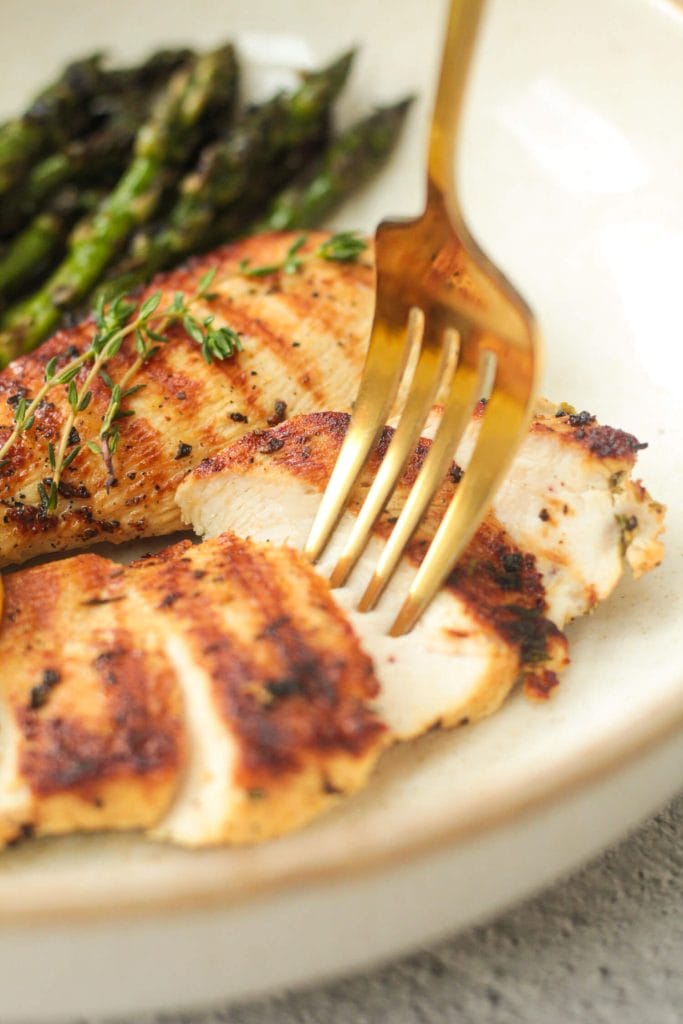
Sear the chicken breast in an oven-safe pan over medium-high heat for 2–3 minutes per side, until golden brown. Transfer the pan to a 180°C (350°F) oven and cook until the thickest part reaches 70–72°C (158–162°F). Let it rest for 5 minutes before slicing. The temperature will often continue to rise by a few degrees as it rests.
Poaching
Poach the chicken in water or stock kept just below a simmer, rather than at a full boil. The gentle heat cooks the meat evenly and reduces moisture loss, producing exceptionally tender, juicy chicken. Add aromatics such as garlic, bay leaves or peppercorns to the poaching liquid for extra flavour. This method is perfect for salads, sandwiches and pasta dishes.
Butterflying (or pounding flat)
Chicken breast is naturally thicker at one end than the other, which means the thinner end can overcook before the thickest part is fully cooked. Butterflying (slicing the breast horizontally and opening it like a book) or pounding it to an even thickness helps it cook much more evenly, reducing the risk of dry, overcooked meat.
Quick summary
Chicken breast is naturally very lean, so it’s easy to overcook. As the internal temperature rises, the muscle proteins contract and squeeze out more moisture. To keep it juicy, take the chill off before cooking, use a meat thermometer, let it rest before slicing, and avoid cooking beyond the recommended internal temperature.
Ready to put this into practice? These recipes are good ones to start with: Easy Chicken Udon Ramen, Roasted Garlic Lemon Pasta with Crispy Chicken or Creamy Mushroom Chicken Skillet.