How to Get Crispy Potatoes Every Time (A Food Scientist Explains)

I have tested a lot of potato recipes. I mean A LOT. Crispy potatoes are genuinely one of my favourite things to eat and for a long time, I couldn’t consistently get them right. Sometimes perfect, sometimes soft and disappointing, and I couldn’t always figure out why.
Turns out, there’s actual science behind it. And once you understand what’s happening, you stop guessing and start getting it right every single time.
The enemy of crispy potatoes: moisture and starch
Before anything else, there are two things you need to manage if you want genuinely crispy potatoes: moisture and excess surface starch.
Moisture is the biggest factor. Potatoes contain a lot of water, and that water has to evaporate from the surface before it can become hot enough for effective browning. Any excess water on the outside (like potatoes going into the oven while they’re still wet) has to evaporate first, which slows down browning and crisping. A sufficiently hot oven helps the surface dry out and brown while the inside remains soft and fluffy.
Surface starch also affects the final texture. Cutting potatoes releases starch onto their surface, and excess surface starch can contribute to a less crisp, slightly gummy exterior. This is why rinsing or soaking cut potatoes can be helpful: it removes some of that loose surface starch before cooking.
The goal isn’t to remove all the starch or all the moisture. That’s impossible and you don’t want to. You want the surface to dry efficiently while the inside stays moist and fluffy. Every technique in this guide is helping you strike that balance.
How to get perfectly crispy potatoes every time
Rule 1: Dry them properly
This is one of the simplest things you can do to improve crispiness and one of the easiest to skip.
After cutting, washing or soaking your potatoes, pat them thoroughly dry. Really dry. Use plenty of paper towels and press firmly. Excess water on the surface has to evaporate before the potato can become hot enough for efficient browning, so starting with a dry surface gives you a head start.
If you have time, leave the cut potatoes uncovered on a tray for 10–15 minutes after patting them dry. This can help any remaining surface moisture evaporate before cooking.
Rule 2: Soak in cold water first (for certain cuts)
For some potato preparations, especially potatoes with lots of freshly cut surfaces, a 15–30 minute soak in cold water can help remove some of the loose surface starch released during cutting. You can often see this in action: the water becomes cloudy as starch washes off the potatoes.
Removing some excess surface starch can improve the texture of the cooked exterior, but the goal isn’t to remove all the starch. Starch is an important part of a potato’s structure and contributes to the texture of the cooked potato.
After soaking, drain the potatoes and dry them thoroughly. There’s little benefit to removing surface starch if you then leave the potatoes covered in water before roasting.
Rule 3: Use plenty of heat
A hot oven helps potatoes become crisp because it speeds up surface evaporation and allows the exterior to reach the temperatures needed for browning.
For many roasted potato recipes, around 220°C (425°F) works very well, but there’s no universal minimum temperature for crispy potatoes. Lower temperatures can still produce crisp results with enough cooking time and the right preparation, they just generally take longer to brown.
What matters most is giving the surface enough time and heat to dry out and brown while the inside stays soft and fluffy.
Rule 4: Don’t crowd the pan
Give your potatoes some space. When they’re packed tightly together, the moisture they release creates a more humid environment around them, which slows evaporation and browning.
Use a large enough tray that the potatoes aren’t touching or are only minimally touching. If you have a lot of potatoes, use two trays rather than piling everything onto one. A little extra space can make a surprisingly big difference.
Rule 5: Fat helps and so does using it evenly
You don’t need a lot of oil to make crispy potatoes, but a light, even coating helps with browning and gives the exterior a richer, more crisp texture. Oil also improves contact between the potato surface and the hot cooking environment.
Olive oil works very well for roasted potatoes and adds plenty of flavour. Neutral oils such as vegetable, sunflower or rapeseed oil are also good choices when you want the potato flavour to stand out.
Butter can add great flavour, but butter contains milk solids and water, which can cause it to brown or burn at high temperatures. If you want buttery flavour at a high roasting temperature, mixing a small amount of butter with oil is a practical option.
Whatever fat you use, coat the potatoes evenly so as much of the surface as possible is exposed to the hot, oily cooking environment. Unevenly coated potatoes will simply brown unevenly too.
Oven vs air fryer — which is better?
Both work. But they work differently.
Oven is better for larger quantities, larger cuts (wedges, halved potatoes, accordion slices) and anything where you want an even, deep golden colour across a large surface. The heat is more ambient, it surrounds the potato from all sides through the hot air in the oven.
Air fryer is better for speed and for smaller pieces. The fan circulates hot air at very high speed, which accelerates moisture evaporation and produces a very crispy surface faster than a conventional oven. A batch of smashed potatoes that takes 40 minutes in the oven takes about 20 in an air fryer. The tradeoff is capacity, you can only do small batches.
For the air fryer specifically: don’t overcrowd the basket (same rule as the oven, but even more important), set the temperature to 200°C (400°F) and check at the halfway point. Most potato recipes translate well from oven to air fryer, just reduce the time by about 30–40%.
Quick summary
Crispy potatoes need a dry surface and enough heat for proper browning. Soak cut potatoes in cold water to remove some surface starch, dry them thoroughly, coat evenly with oil, space them out and roast at around 220°C (425°F). In an air fryer, 200°C (400°F) for about 20–25 minutes works well, depending on size.
Put this into practice with these recipes:
- Crispy Garlic Accordion Potatoes — the cold water soak and accordion cut in action
- Crispy Garlic Parmesan Potatoes — the most requested side dish in our house
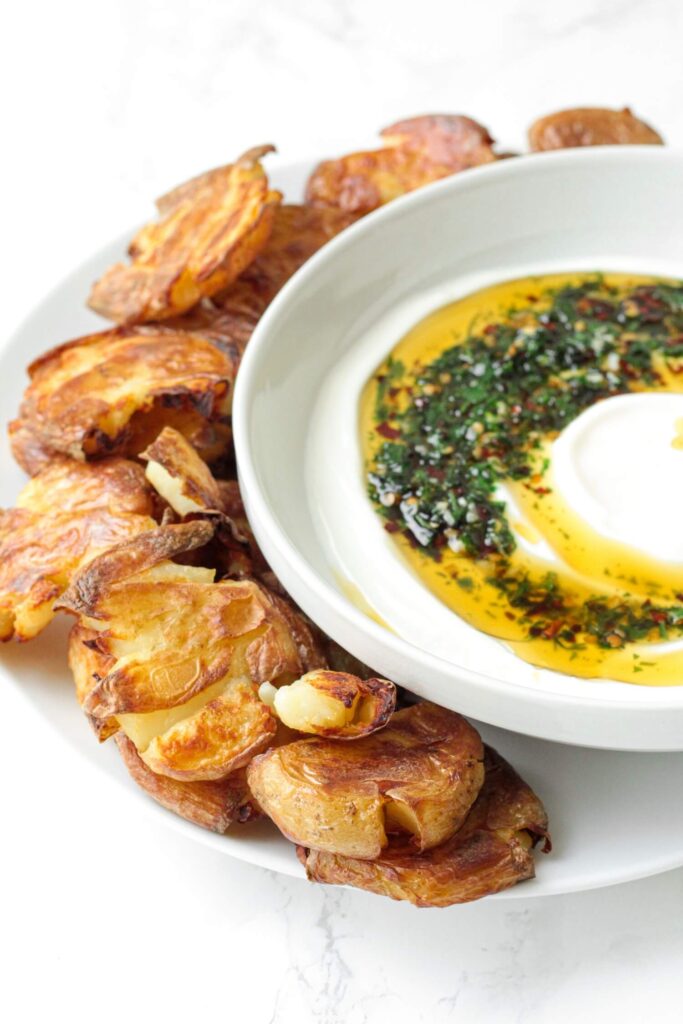
- Crispy Smashed Potatoes with Yogurt Dip — boiled, smashed, then roasted at high heat for maximum crispy edges
- Roasted Garlic Potatoes au Gratin — when you want something creamy instead